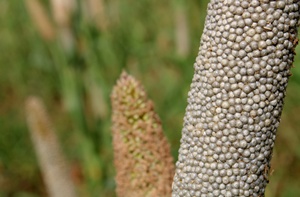
Iron and zinc contents in grain and stover of pearl millet grown under water-deficit conditions at various stages of development
Abstract
Globally, many people face the problem of hidden hunger related to Fe and Zn deficiencies. Improving the level of these micronutrients in crops such as pearl millet that is widely cultivated and consumed in many tropical areas can be one way to mitigate the menace. Influence of water stress (deficit) on the Fe and Zn content of pearl millet was studied at various developmental stages of the crop. The study was conducted under greenhouse conditions at Dutsinma in Katsina State. The experiment consisted of six treatments representing water stress at: A = leaf stage during the first 13 Days After Emergence (13 DAE), B = panicle initiation stage (14-27 DAE), C = boot stage (28-41 DAE), D = milk stage (42-55 DAE), E = dough stage (56-70 DAE) and F = control treatment (full irrigation regime). Experimental design was the Completely Randomized Design (CRD) replicated 3 times. Crop and soil data were collected according to standard procedures. Results indicated that water stress at various stages of growth significantly improved Fe and Zn contents of grain and stover. At dough stage, the grain Fe and Zn contents were significantly increased by at least 49.3%, while stover Fe and Zn contents significantly increased by 55.6% and 70.3% respectively during the boot stage. It was recommended to avoid early planting of pearl millet so that the quality of the grains can be improved in terms of Fe and Zn. There is need for more research practices that can improve crops nutritional quality in relation to micronutrients.
Keywords: Iron, Zinc, Pearl Millet, Water deficit
INTRODUCTION
Iron and Zinc are critical essential micronutrients in plant and animal nutrition. Iron is principally a component of many proteins such as blood hemoglobin and enzymes, while Zinc is known to be a catalyst for at least 200 enzymes and it is also a structural constituent of many neuropeptides, hormones and proteins (Marschner, 2012; Czauderna, 2020). Recently, the world faces the challenge of micronutrients deficiency as more than 2 billion people lack one or more of the essential micronutrients (Melash and Mangistu, 2020). In Nigeria, an estimated 6 million children suffer Fe and Zn deficiencies. High prevalence of these deficiencies is mostly among the low income population due to inadequate intake from foods or as a result of increased body requirements and/or losses (Cole et al, 2010; Okwuonu et al., 2021). Moreover, a large part of the country’s GDP is lost to micronutrients deficiency. Illnesses such as poor vision, anemia, stunting, mental and cognitive impairment are frequently linked to micronutrients deficiency (kodish et al., 2022). Reasons for high micronutrient malnutrition are related to consumption of monotonous foods (such as rice and wheat) that contain low concentration of micronutrients, less dietary diversification and the depletion of soil micronutrients.
In many tropical areas, Pearl millet (Pennisetum glaucum L.) is among the first four most important food crops (maize, rice, sorghum and pearl millet). Essentially, the crop is a major source of diet in certain parts of Asia and Africa, particularly in the Sahel of Africa, where many people mostly depend on it for food (Kalaisekar et al., 2017). The crop is a source of nutrition to a large number of individuals (more than 100 million) in the rural areas of India and Sub-Saharan Africa (Earl, 2018). Recently, pearl millet is gaining prominence as an important nutritious crop that promotes human health and is also climate resilient (Santosh et al., 2016). The crop is easily grown in the dry Northern parts of Nigeria due to its ability to tolerate harsh conditions such as seasonal droughts and flood. In particular, the crop is well adapted to areas of high temperatures, drought and low soil fertility. It performs well in soils with relatively low pH or high salinity, hence it is cultivated in places where other crops such as rice, maize and wheat hardly survive. Pearl millet grain is very nutritious and contains approximately 11 to 19% protein, 60 to 78% carbohydrate, 3 to 5% oil and good amounts of phosphorus and iron (Divya et al., 2017). The amount of Fe and Zn in pearl millet has been documented by previous researchers including Obilana (2005) who reported 114 mg/kg of Fe and 20 mg/kg of Zn while Martins et al. (2018) reported 18 mg/kg of Fe and 43 mg/kg of Zn and suggested bio-fortification of pearl millet to boost Fe and Zn profile. Records from Khairwal (2007) indicated that pearl millet grains contain approximately 88 mg/kg Fe and 50 mg/kg of Zn. Moreover, Srivastava et al. (2021) submitted that pearl millet grains relatively contain higher amount of Fe (22-154 mg/kg) and Zn (19-121 mg/kg) when compared with wheat, maize and rice. Additionally, the Fe (43 mg/kg) and Zn (32 mg/kg) contents of pearl millet were described by Govindaraj (2022) as low and therefore the need to improve through bio-fortification.
Water-deficit or drought affects the growth and development of crop plants (Oliveira and Farias, 2014) both negatively and positively (Stagneri et al., 2016). For a crop like pearl millet that is highly drought tolerant, water-deficit can still lead to lower biomass yield (Jennings et al., 2021). Moreover, research on pearl millet is low principally due to scarce economic and technological support (Macauly and Ramadjita, 2015). Therefore, more research on pearl millet is expected to definitely improve its nutritional quality and productivity. Generally, few studies investigated the effect of water deficit on the Iron and Zinc concentration of pearl millet (Taiz and Zeiger, 2002; Welch, 2023) despite the fact that water-deficit can improve the accumulation of certain nutrients by particular species of crop plants (Payne et al., 2019), even if the crop yield may decline. Furthermore, Welch (2023) emphasized that the technology is available to improve both the yield and nutrient profile (quality) in pearl millet. Therefore, the objective of this research was to determine the concentration of Fe and Zn in the grains and stover of pearl millet as influenced by water deficit at various developmental stages of the crop.
MATERIALS AND METHODS
Study area
The experimental study was carried out between February to May, of the year 2025, at the greenhouse facility of Isa Kaita College of Education Dutsinma (12.455° N and 7.498° E; elevation: 605 m) in Katsina State. The area is within the Sudan Savanna zone of Nigeria. The climate is that of tropical wet and dry Koppen system denoted as Aw. Insolation in the area is high due to low cloud cover. Average daily sunshine is approximately regarded as 9 hours per day. The long dry season is between November to May with relative humidity less than 40%, while the short wet season occur between June and October (Okonkwo, 2010). Annual rainfall is 400-600 mm, while average temperature is 25 ± 7⁰ C throughout the year (Shehu et al., 2015).
Treatments and experimental design
The treatments (A to F) consisted of 6 irrigation regimes based on the growth and developmental stages of pearl millet as follows:
A = No irrigation in the first 13 days after emergence (3-5 leaf stage);
B = No irrigation between 14 to 27 days after emergence (panicle initiation stage);
C = No irrigation between 28 to 41 days after emergence (boot stage);
D = No irrigation between 42 to 55 days after emergence (milk stage);
E = No irrigation between 56 to 70 days after emergence (dough stage);
F = Full irrigation at field capacity every 5-days (control treatment).
Irrigation was provided at field capacity as determined gravimetrically every 5-days interval (Suhailbani, 2011) except during the “no irrigation period” as appropriate for the various treatments (A to E).
The treatments were arranged in a Completely Randomized Design (CRD) replicated 3 times to have 6 x 3 = 18 pots.
Test crop
The test crop was pearl millet (Super SOSAT variety). Prominent features of the variety (FAO, 2017; Ajeigbe et al., 2020) are summarized below:
• Name of crop species: Pennisetum glaucum L. (pearl millet);
• Variety name: Super SOSAT (LCICMV-3);
• Original name: PE05532;
• Outstanding features: High yielding (≃ 4 t/ha grain);
• Drought tolerant;
• Resistance to downy mildew disease;
• Good food quality;
• Stout stalk for fencing;
• Maturity: 80-90 days;
• Origin: ICRISAT/Mali;
• Developing institutes: LCRI Maiduguri/ICRISAT Niamey;
• Year of release: 2011;
• Year of registration: 2011.
Soil sampling and analyses
Composite soil sample from the College farm plot (under fallow for >5 years) was collected in February 2024. Soil was sampled at a depth of 0-20 cm (zig-zag pattern). Equal amounts of soil samples were thoroughly mixed to form one composite sample. The soil was then used to fill-up the greenhouse pots for growing pearl millet. Composite soil sub-sample was then air-dried and crushed to pass through a 2 mm sieve. 3 sub-samples were then analyzed for selected physical and chemical properties by using standard procedures as follows: -Particle size distribution was determined using the hydrometer method (Gee and Bauder, 1986). Total nitrogen by Kjeldahl method (Bremner and Mulvaney, 1982) Soil available P using Bray No. 1 method (Bray and Kurtz, 1945; Jackson, 1962). Organic carbon by modified Walkley-Black method as detailed by Nelson and Sommers (1982). Exchangeable bases by extraction with ammonium acetate. K and Na were determined by flame photometry while Mg and Ca were determined using the atomic absorption spectrophotometer (Anderson and Ingram, 1993). Effective Cation Exchange Capacity was determined by the sum of exchangeable acidity and exchangeable bases (Anderson and Ingram, 1993).Soil pH in water and 0.01M CaCl2 in the ratio of 1:2.5 (Soil:Solution).The micronutrients (Cu, Fe, Mn and Zn) were determined using the method described by Estafan et al. (2013) whereby diethylene triamine pentaacetic acid (DTPA) in combination with calcium chloride (CaCl2) and triethanolamine (TEA) were used as extraction solution. 10 g of air-dried soil was put into a 125 ml Erlenmeyer flask then 20 ml extraction solution was added and the mixture shaken for 2 hours on a reciprocal shaker. The suspension was filtered using Whatman 42 filter paper. The micronutrients were determined via Atomic Absorption Spectrophotometer (AAS).
Greenhouse procedure
There were 18 perforated pots. Each pot was filled with 14.2 kg of air-dried soil. The perforation was for free drainage and adequate aeration. Plastic receivers were placed underneath the pots to collect any seepage which is subsequently returned back to the pots. Soil in each pot was thoroughly mixed and watered to field capacity before pearl millet seeds (Super SOSAT) were sown. Four seeds were sown per pot and later thinned down to two plants per pot. Fertilizer was applied according to the optimum recommended rate of NPK for pearl millet which is 60 kg N/ha, 30 kg P2O5/ha and 30 kg K2O/ha respectively (Ajeigbe et al., 2020).
Plant samples analyses
Grains and foliage samples from each pot were taken after harvest at 12 WAS. From each pot, the grains (50 g) and foliage (cut into pieces for homogenization) were separately oven-dried @ 70 ⁰C for 72 hours and then ground to pass through 1 mm screen. The sub-samples (in triplicate) were then analyzed for Fe and Zn as detailed by Estefan et al. (2013):
One gram of dry and ground grain/foliage was put into a 150 ml conical flask. Then concentrated H2SO4 + HNO3 +HClO4 acids were added and heated for 1 hour @ 240⁰C, before filtering and the Fe and Zn (mg/kg) were determined with AAS (Agilent Technologies 200 series; model no. 240 FS).
The Bioconcentration Factor (BCF) was calculated as detailed by Qihang et al. (2011) using the following expression;
BCF = Metal concentration in plant part (mg/kg) / Metal concentration in soil (mg/kg)
Whereby, a BCF of > 1.0 indicates the plant accumulates the metal to a higher concentration than the soil.
Statistical analysis
All data analyses were conducted by using the Analysis of Variance (ANOVA) of GENSTAT statistical software to determine statistical significance. Means were separated by the Least Significant Difference (LSD) test at p < 0.05. Percentage increase was determined by the following relationship:
% increase = (Yieldtreatment – Yieldcontrol / Yieldcontrol) x 100
(As detailed by Kenton, 2022)
RESULTS AND DISCUSSION
Physico-chemical properties of the soil used
Initial physico-Chemical properties of soil used for this study is presented in Table 1. It can be seen that the soil was mainly sand in texture, near neutral in reaction (pH = 7.1) with low content of Nitrogen (0.18 %), Available Phosphorus (12.5 mg/kg), exchangeable Potassium (0.17 cmol/kg) and Organic carbon (0.56 %). Such a soil is regarded as having low fertility status (Bary, 2016; Sani et al., 2025) while Adamty (2016) and Abdulkadir et al., (2025) indicated that soils of the Nigerian Savanna are inherently low in fertility and lack the ability to hold good amount of water and nutrients. However, the reaction of the soil (pH of 7.1) implies that the availability of essential micronutrients (Fe, Zn, Cu and Mn) is reduced (Weil and Brady, 2017; Sani et al., 2026) because these micronutrients are more available to plants when soil pH is below 6.5 (Horneck et al., 2023). Essentially, the initial soil Zn content of 0.72 mg/kg is low since soil Zn content of < 0.8 mg/kg is regarded as low (Amin et al., 2019; Souza et al., 2024). Also, the Cu amount (0.11 mg/kg) of the soil was low. However, the initial Fe content of the soil used (5.82) was high because Fe content in soil above 5.0 mg/kg is described as sufficiently high (Souza et al., 2024). The soil Mn content was also high (> 5.0). The low content of Zn and Cu may be due to the sandy texture of the soil, low amount of organic matter and near neutral pH of the soil (Jones, 2012). While high amount of Fe and Mn can be attributed to other nutrients interactions related to low levels of Cu and Zn (Havlin et al., 2005).
Effect of treatments on Fe content
Results showing the effect of water stress (deficit) on Fe content in grain and stover of pearl millet is presented in Table 2. It can be said that water stress during the dough stage of development (at 56-70 DAE) significantly improved both grain and stover Fe content than all other treatments. This suggests that late season drought may improve the Fe content in grain and stover of pearl millet.
At dough stage (56-70 DAE), grain and stover Fe content increased by 49.3% and 71.1% respectively. In contrast, the result indicates that early season drought (leaf initiation stage @ 13 DAE) significantly decreased grain Fe content while full irrigation (control) also significantly reduced stover Fe content when compared with other treatments.
The fact that at dough stage, Fe content in both grains and stover was significantly superior to all other treatments has an important implication due to the recommendation by Sheahan (2024) to cut pearl millet for forage during the dough stage of development (8-9 weeks after planting). This will provide more Fe nutrition to livestock animals. Generally, the dough stage in pearl millet is highly marked by a high demand for nutrients and dry matter accumulation mainly through remobilization from source organs (leaves and stem) to sink organs (grains). Moreover, Aliyu (2024) recommended the inducement of water stress during dough stage of the crop’s development for improved pearl millet productivity. Furthermore, water stress is known to be a factor that determines leaf senescence which directly triggers the remobilization of nutrients such as Fe and Zn from source organs to sink organs (Marschner, 2012). Remobilization of Fe and Zn from leaf to grains is highly dependent on leaf senescence and the leaf senescence is commonly triggered by age and water deficiency among other factors (Zhang et al., 2021). Thus the water deficit conditions during the dough stage of pearl millet development may have led to remarkable remobilization of Fe from source organs to sink organ (grains) due to both age and drought stress. However, it is clear that the stover Fe content of control treatment (full irrigation regime) was significantly lower than all other treatments (Table 2), which suggests that water stress significantly encourages Fe accumulation in pearl millet.
With respect to the Bioconcentration Factor (BCF) in Table 2, there is indication that the crop has accumulated much Fe especially during panicle initiation and milk stages of development which are periods that are prior to dough stage of development. This may have enabled the crop to highly remobilize Fe and still retain much Fe in the stover during the dough stage. Essentially, the grain and stover Fe BCFs revealed that good amounts of soil Fe are transferred to the plants that were under water stress during the panicle initiation stage (14-27 DEA), hence, the crop can be used for reasons related to bioremediation of Fe. It can also be observed that soil Fe in control treatment (full irrigation regime) was significantly superior to all other treatments (Table 2). This suggests that water stress leads to increased mining of Fe from soil.
Effect of treatments on Zn content
From the results in Table 3, Zn content in the grains was significantly superior than all other treatments during the milk stage of pearl millet development (42-55 DAE). Next in significant superiority was during the dough stage of development (56-70 DAE). This is suggesting that water stress at later stages of development enhances the Zn content of grains in pearl millet. It is interesting to observe that at various stages of pearl millet development (Boot, milk and dough) grain Zn contents were significantly superior than the control treatment (full irrigation regime). The established average grain Zn content in pearl millet have been reported as 50 mg/kg or 70 mg/kg (Khairwal, 2007; Srivastava et al., 2021). This means that the grain Zn contents during boot, milk or dough stages were relatively higher than the reported average. Therefore, water stress during boot, milk or dough stage of development may significantly boost the Zn profile in the gains of pearl millet.
For the stover Zn contents, water stress during the early stages of development (panicle initiation, leaf and boot stages) were significantly superior to other treatments. This is an indication that during the early stages of development, water stress may have encouraged the crop to accumulate a lot of Zn in stover (leaves and stem) to probably keep for remobilization during the later stages of development (milk and dough stages). Essentially, the result is suggesting that during the early stages of development, pearl millet accumulates Zn in source organs of stover (leaves and stem) and then remobilize Zn to sink organs (grains) at later stages of development. Stover Zn content was significantly highest during water stress at boot stage (28-41 DAE). This is important in terms of using pearl millet as forage crop to boost Zn profile for livestock feed and feeding.
Soil Zn content in all the treatments ranges between 0.37-0.94 mg/kg. These values are generally regarded as low to medium because soil Zn content of less than 0.8 mg/kg is described as low while 0.8-2.0 mg/kg is medium (Souza et al., 2024). Even though Weil and Brady (2017) reported that low content of micronutrients in soil and their unavailability to growing plants lead to their deficiencies in crops, yet, pearl millet was able to relatively accumulate high amount of Zn under water stress at various stages of development. In fact, water stress at milk or dough stage increased grain Zn content by 49.4% to 55.8% while stover Zn content was increased by at least 62.1% and 70.0% during leaf initiation stage and boot stage respectively.
The Bioconcentration Factors (BCF) of grain Zn ranged between 74 to 217 while the BCF in stover Zn ranged from 117 to 337. These are values that suggest pearl millet is a very good crop to use in phytoextraction of Zn from Savanna soils. Essentially, water stress at leaf stage (13 DAE) led to highest stover BCF of 337 which is important in terms of using the crop to extract a lot of Zn from soil at the initial stages of growth so that it can be remobilized during the later stages of development or it can serve as a means to quickly get rid of Zn in case of environmental pollution (phytoremediation). Sabour and Aliyu (2025) recommended the use of pearl millet in phytoextraction of Zn due to its ability to relatively accumulate more Zn than other crops (soybean and cowpea).
CONCLUSION
Water stress (deficit) at various stages of growth and development in pearl millet was studied to determine the effect on Fe and Zn content in grains and stover of the crop. It was observed that water stress during the dough stage (56 to 70 DAE) led to significant increases in the amount of Fe in grains and stover by 49.3% and 71.1% respectively, while Zn content was significantly increased by 55.8% (in grains). Moreover, stover Fe and Zn contents were significantly increased during the early stages of growth (leaf stage, panicle initiation and boot stages). This can greatly improve the quality of pearl millet forage for livestock nutrition. Essentially, mid-season drought (boot stage) significantly enhanced stover Fe and Zn, while late season drought (dough stage) significantly increased grain Fe and Zn in pearl millet.
The results suggest that water stress during the dough stage of development significantly increases Fe and Zn content in the grains of pearl millet, therefore early planting of the crop should be avoided in order to enhance its Fe and Zn profile at dough stage (56 to 70 DAE). There is need for more research to determine physiological processes in plants that can enhance the nutritional quality of food crops.
REFERENCES
Abdulkadir A, Halilu Y., Sani S. (2022). Evaluation of physical and chemical properties of soils at bichi local government area, Kano State, Nigeria. IRE Journal, 5: 556–562.
Abdulkadir A., Manne I. Z., Sani S. (2025). Impact of distance from the water body on the point of zero charge of Dutsin-Ma Dam floodplain soils, Katsina State, Nigeria. International Journal of Bonorowo Wetlands, 15: 1-6.
Adamty N. (2016). Challenges for organic agriculture research in tropical zones. Soil fertility and waste management in the tropics. BIOFAC, Nurnberg, Germany.
Ajeigbe H.A., Angarawai I.I., Inuwa A.H., Akinseye F.M., AbduAzeez T. (2020). Handbook on improved pearl millet production practices in North Eastern Nigeria. IITA Feed the Future Publication. Abuja, Nigeria.
Aliyu N.A. (2024). Performance of pearl millet (Pennisetum glaucum L.) under water stress at various stages of growth and development in Sudan Savanna, Nigeria.
Anderson J.M., J.S.I. Ingram (1993). Tropical soil biology and fertility. A handbook of methods 2nd edition. CAB International.
Bary A., Cogger C., Sullivan D. (2016). Fertilizing with manure and other organic amendments. Washington State University Extension.
Bray R.H., Kurtz L.T. (1945). Determination of total organic and available forms of phosphorus in soils. Soil Sci., 19: 39 – 45.
Bremner J.M., C.S. Mulvaney (1982). Nitrogen Total. In Methods of Soil Analysis part 2. Chemical and Microbiological Properties. Am. Soc. Agron. Madison. Pp. 595 – 641.
Cole C.R., Grant F.K., Dawn S.E, Smith J.L., Anne J.,Caldwell K.L., Pfeiffer C.M., Ziegler T.R. (2021). Zinc and iron deficiency and their interrelation in low-income african american and hispanic children in Atlanta. The American Journal of Clinical Nutrition, 91: 1027-1034.
Czauderna M. (2020). Physiological functions of trace essential elements in animal organisms. Animals. Special issue.
Divya G., Vani K.P., Badu P.S., Devi K.B.S. (2017). Yield attributes and Yield of summer pearl millet as influenced by cultivars and integrated nutrient management. International Journal of Current Microbiology and Applied Sciences, 6: 1491-1495.
Earl B. (2018). Anatomics in Pearl millet. Future Food. University of Nottingham.
Estefan G., Sommer R., Ryan J. (2013). Methods of Soil, Plant and Water Analysis: A manual for West Asia and North Africa Region. ICARDA, Beirut.
FAO (2017). FAO statistics division. Data-Crops Production.
Gee G.W., Bauder J.W. (1986). Particle size analysis. In Klute (ed.). Methods of Soil Analysis (2nd Ed.) No. 9. ASA Inc. Madison, Washington D.C. Pp. 383 – 409.
Govindaraj M., Kanatti A., Rai K.N., Pfeiffer W.H., Shivade H. (2022). Association of grain iron and zinc content with other nutrients in pearl millet germplasm, breeding lines and hybrids. Frontiers in Nutrition, 8: 746625.
Havlin J.L., Tisdale S.L., Nelson W.L., Beaton J.D. (2005). Soil Fertility and Fertilizers. Pearson.
Horneck D.A., Sullivan D.M., Owen J.S., Hart J.M. (2023). Soil test interpretation guide. Oregon State University Extension Services.
Jackson M.L. (1962). Soil Chemical Analysis. Prentice Hall, New York, USA.
Jennings E., Vandramini J., Blount A. (2021). Pearl Millet (Pennisetum glaucum L.). An overview and management. IFAS Extension. University of Florida.
Jones B.J. (2012). Plant nutrition and soil fertility manual. Taylor & Francis.
Kalaisekar A., Padmaja P.G., Bhagwat V.R., Patil J.V. (2017). Insect pests of millet. Academic Press.
Khairwal I.S., Rai K.N., Diwakar B., Sharma Y.K., Rajpurohit B.S., Bindu N., Ranjana, B. (2007). Pearl Millet: Crop management and seed production manual. ICRISAT, India.
Kodish S.R., Isokpunwu C., Osunkentan T., Imohe A., Ejembi C.L., Chitekwe S., Arjan W., Mathema P. (2022). Acceptance and compliance with micronutrients powder (MNP) among children aged 6-23 month in Northern Nigeria. PLOS Global Public health, 2: e0000961.
Macauley H., Ramadjita T. (2015). Cereal Crops: Rice, Maize, Millet, Sorghum, Wheat. In UNECF (Ed). Feeding Africa. Pp36. Abdou Diouf International conference centre.
Marschner P. (2012). Marschner’s Mineral Nutrition of Higher Plants (3rd edition). Academic Press, London.
Martins A.M.D., Pessanha K.L.F., Pacheco S., Rodriques J.A.S., Carvalho C.W.P. (2018). Food security, processing, health benefits and nutritional products. Food Research International, 109:175-186.
Melash A.A., Mengistu D.K. (2020). Improving grain micronutrient content of durum wheat (Triticum turgidum var. durum) through agronomic biofortification to alleviate the hidden hunger. Advances in Agriculture, 2020: 7825413.
Muhammad Amin A., Sani M., Bello Ahmad U., Sufiyanu S., Bashir Shehu H., Wada Rabiu A., Afiya Kabir L. (2019). Geo-statistical mapping of some soil fertility constraints in sorghum-based cropping system of Sudano-Sahelian zone of Nigeria. , 6: 146–152.
Muhammad A., Musa M., Sani S., Ibrahim U. M. (2024). Environmental contamination by agrochemicals and its indiscriminate use by dry season farmers in Sudan Savannah of Katsina State. Sahel Journal of Life Sciences FUDMA, 2: 67–77.
Musa Z., Ango K.A., Sani S. (2025). Ecological assessment of tree species composition and diversity in Federal University Dutsin-Ma campus, Nigeria. Agriculture, Food and Natural Resources Journal, 4: 31–37.
Mustapha M.K., Garba N.H., Sufiyanu S., Ibrahim M. (2025). Effects of poultry manure rates and rhizobial inoculation on vegetative growth of groundnut in Sudan Savannah of Nigeria. African Journal of Agricultural Science and Food Research, 21: 67-83.
Nelson D.W., Sommers L.E. (1982). Total carbon, organic carbon and organic matter, in Methods of Soil Analysis Part 2. American Society of Agronomy, Madison. Pp. 539 – 579.
Noma S.S., S. Sani (2008) estimation of soil organic matter content in soils of Sokoto Area: Comparing Walkley- Black and a proposed unconventional method. Techno Science Africana Journal, 2: 71-76.
Obilana A.B. (2005). Overview: Importance of Pearl Millet in Africa. ICRISAT, Nairobi.
Okonkwo M.C. (2010). Analysis of Agroforestry Practices in Katsina State, Nigeria. Unpublished Ph.D Thesis, Department of Geography, University of Jos, Nigeria.
Okwuonu I.C., Narayaran N.N., Egesi C.N., Taylor N.J. (2021). Opportunities and challenges for biofortification of cassava to address iron and zinc deficiency in Nigeria. Global Food Security, 28:100478.
Oliveira A.C., Farias D.R. (2014). Climate change: new breeding pressures and goals. Encyclopedia of Agriculture and Food Systems.
Payne W.A., Hossner L.R., Onken A.B., Wendt C.W. (2019). Nitrogen and phosphorus uptake in pearl millet and its relation to nutrient and transpiration efficiency. Agronomy Journal , 85:425-431.
Qihang W., Wang P.T., Qingfei H.Z., Jun B., Qui R. (2011). Phytostabilization of Jatropha curcus L. in polymetallic acid mine tailings. International Journal of Phytoremediation, 13: 788-804.
Sabour A., Aliyu N.A. (2025). Phytoextraction of Cu and Zn by plant species (Pearl millet, Cowpea and soybean) in a Sudan Savanna Inceptisol. Project report series. Department of Soil Science. Federal University Dutsinma, Nigeria.
Sani M., Alhassan I., Amin M.A., Sani S., Musa A.A. (2019) Trends of soil organic matter and cation exchange capacity in Nigerian Northern Guinea Savannah, in relation to the soil texture and depth. Dutse Journal of Agriculture and Food Security, 6: 100-108.
Sani S., Abdulkadir A., Pantami S.A. (2022). Assessment of water quality for irrigation purposes in Jibi a Irrigation Project, Katsina State, Nigeria. IOSR J. Agr. and Vet. Sci., 15:54-58.
Sani S., Abdulkadir A., Abubakar B., Muazu S., Wakili Habib D., Sani M., Hamza H. (2025). Assessment of water quality for irrigation in Dutsin - Ma Dam, Katsina State, Nigeria. African Journal of Agricultural Science and Food Research, 20: 191 –210.
Sani S., Abdullahi M., Aliyu A. (2026). Evaluation of Soil Physical properties under different land uses in Semi Arid Nigeria. Moroccan Journal of Agricultural Sciences, 7: 1-7.
Sani S., Aliyu A., Muhammad M. (2025). Spatial variability and mapping of soil structural stability: The Interplay of Texture and Organic Matter at Jibia Irrigation Project, Semi - Arid Zone of Nigeria. Sahel Journal of Life Sciences FUDMA, 3: 55–67.
Santosh K.P., Upadhyaya H.D., Sangam L.D., Mani V., Reddy K.N. (2016). Genetic and genomic resources for grain cereals improvement. Academic press. 253-289. Elsevier Inc.
Sheahan C.M. (2014). Plant Guide for pearl Millet (Pennisetum glaucum L.). USDA Natural resource Conservation service, Cape May plant Material Center, Cape May, New Jersey.
Shehu B.M., Jibrin J.M., Samndi A.M. (2015). Fertility status of selected soils in Sudan Savanna biome of Nigeria. International Journal of Soil Science, 10: 74-83.
Souza H.A., Lima A.J., Pompeu R.C.F., Guedes F.L., Tonucci R.G. (2024). Critical levels and fertility classes of soils with high activity clay in the Brazilian Semi-arid region. Revista Brasileira de Ciencia Do solo, 48: e0230154.
Srivastava R.K., Satyavathi C.T., Mahendrakar M.D., Singh R.B., Kumar S., Govindaraj M., Ghazi I.A. (2021). Addressing Iron and Zinc micronutrient malnutrition through nutrigenomics in Pearl Millet: Advances and Prospects. Frontiers in Genetics, 12: 723472.
Stagneri F., Galieni A., Pisante M. (2016). Drought stress effects on crop quality. Wiley online Library.
Sufiyanu Sani, Aliyu Abdulkadir, Musa Muhammad, Musab Ibrahim, Abdulsalam Sani Nababa, Ahmad Ubaidullah, Aliyu Suleiman (2024). Assessment of soil salinity and sodicity status at Jibia Irrigation Project, Katsina State, Nigeria. Life Sciences: an International Journal, 1.
Sufiyanu Sani, Hafsat Ya’u, Abdulkadir Aliyu, Amoo Abdulazeez Ademola, Halima Yakubu, Basiru Labaran Jazuli and Garba Nuhu Harisu (2025). Evaluation of soil organic matter and cation exchange capacity in relation to distance from Dam in Dutsin-Ma Floodplain Soils Katsina state Nigeria. Journal Clean WAS, 1: 46-50.
Suhaibani N.A. (2011). Better forage and grain yield quality of Pearl Millet (Pennisetum glaucum L.). under different irrigation water supplies and plant densities. World Applied Sciences Journal, 15:1136-1143.
Taiz L., Zeiger E. (2002). Plant Physiology. Sinauer Associates.
Weil R.R., Brady N.C. (2017). The nature and properties of soils (15th ed.). Pearson Educational.
Welch R.M. (2023). Micronutrients, Agriculture and Nutrition: linkages for improved health and well-being. USDA-ARS, U.S. Plant, Soil and Nutrition Laboratory.
Zhang Y.X., Li Z., Guo P., Guo H. (2021). Multiple layers of regulation on leaf senecence: new advances and perspectives. Frontiers in Plant science, 12.