Antibacterial activity and GC–MS profiling of Artemisia annua extract against Aeromonas hydrophila isolated from African catfish
Abstract
Aeromonas hydrophila is an important bacterial pathogen of cultured fish and is associated with motile Aeromonas septicemia and economic losses in aquaculture. The increasing concern regarding antimicrobial resistance has encouraged the evaluation of plant-derived alternatives. This study evaluated the in vitro antibacterial activity and chemical profile of an ethanolic extract of Artemisia annua against A. hydrophila isolated from Clarias gariepinus in Dutsin-Ma, Katsina State, Nigeria. Clarias gariepinus showing clinical signs compatible with bacterial disease were collected from selected fish farms and markets in Dutsin-Ma and processed under aseptic conditions. The bacterial isolate was identified by cultural morphology, Gram staining, and biochemical tests including oxidase, catalase, indole, motility, urease, and Triple Sugar Iron reactions. A. annua leaves were authenticated, air-dried, powdered, and extracted with 99% ethanol at a 1:5 (weight/volume) ratio using a rotary evaporator. Gas chromatography–mass spectrometry (GC–MS) was used to characterize compounds detected in the extract. GC–MS profiling identified 28 library-assigned compounds. The most abundant detected compounds were 3-dibenzofuranamine (24.0 %), 4-dibenzofuranamine (19.2%), a limonene isomer (9.44%), and 3,5-heptanedione, 2,2,6,6-tetramethyl- (10.1%). Antibacterial activity was assessed by agar well diffusion, while minimum inhibitory concentration (MIC) and minimum bactericidal concentration (MBC) were determined by broth dilution and subculture, respectively. The isolate displayed the expected phenotypic profile of A. hydrophila: Gram-negative rod, oxidase-positive, catalase-positive, indole-positive, motile, TSI-positive, and urease-negative. The extract inhibited A. hydrophila at the highest concentration tested, with an MIC of 100 mg/mL; no MBC was recorded within the tested range. Thus, the extract was demonstrated to have a bacteriostatic rather than a demonstrably bactericidal effect under the conditions used. Ethanolic A. annua extract showed potential as a plant-derived antibacterial candidate against A. hydrophila. The findings support further standardized phytochemical confirmation, dose optimization, toxicity assessment, and in vivo evaluation before practical application in aquaculture.
Keywords: Artemisia annua; Aeromonas hydrophila; Clarias gariepinus; antibacterial activity
INTRODUCTION
Aquaculture is an increasingly important contributor to global animal protein production and has an important role in food security, income generation, and employment. In Nigeria, the African catfish (Clarias gariepinus) is widely cultured because of its fast growth, tolerance of relatively harsh culture conditions, omnivorous feeding habit, and strong market acceptance. However, intensive production can increase stress and disease pressure, thereby constraining sustainable fish production (FAO, 2024; El-Sayed et al., 2021). Bacterial diseases are among the major health problems in aquaculture. Aeromonas hydrophila is a Gram-negative, facultatively anaerobic aquatic bacterium associated with motile Aeromonas septicemia in fish. Clinical manifestations may include hemorrhages, ulceration, fin erosion, abdominal swelling, septicemia, and mortality. Its pathogenicity is associated with virulence determinants such as hemolysins, aerolysin, proteases, lipases, and enterotoxins (Semwal et al., 2023).
Control of bacterial disease in aquaculture has traditionally relied heavily on antibiotics and other chemotherapeutic agents. However, indiscriminate or excessive use may contribute to antimicrobial resistance, environmental contamination, and drug residues in fish products (FAO, 2024; Defoirdt, 2020; Hossain et al., 2020). These concerns have increased interest in medicinal plants as alternative or complementary disease-control resources. Artemisia annua (sweet wormwood), a member of the Asteraceae family, is widely recognized for its artemisinin content and medicinal importance. In addition to artemisinin, A. annua contains diverse secondary metabolites that may contribute to antimicrobial and antioxidant effects (Efferth, 2017; Salehi et al., 2020).
Previous studies have reported activity of Artemisia-derived preparations against fish pathogens, including A. hydrophila and other bacterial species (Juteau et al., 2002; Soares et al., 2020; Sakhaie et al., 2025). Despite these reports, information on the activity of A. annua ethanolic extract against A. hydrophila isolated from C. gariepinus in Dutsin-Ma, Katsina State, Nigeria, remains limited. Therefore, this study evaluated the in vitro antibacterial activity of an ethanolic extract of A. annua against A. hydrophila isolated from C. gariepinus and characterized compounds detected in the extract using GC–MS.
MATERIALS AND METHODS
Study area
The study was conducted in Dutsin-Ma, Katsina State, Nigeria, with laboratory work carried out in the Department of Microbiology, Federal University Dutsin-Ma. Federal University Dutsin-Ma, Take-off Campus, Katsina State, Nigeria. The FUDMA take-off campus in Dutsin-Ma Local Government Area of Katsina State, Nigeria, lies between Latitude 12.47275°N and Longitude 7.48582°E (Muhammad et al., 2025)
Collection and processing of fish samples
Live and freshly harvested C. gariepinus showing clinical signs such as skin lesions, hemorrhages, and fin erosion were collected from selected fish farms and markets in Dutsin-Ma. Samples were transported in sterile containers under aseptic conditions to the microbiology laboratory for immediate processing (Austin and Austin, 2021).
Isolation and identification of Aeromonas hydrophila
Bacterial isolates were characterized by colony morphology and Gram staining. Identification was supported by oxidase, catalase, indole, motility, urease, and Triple Sugar Iron (TSI) tests following the procedures described in the supplied methodology (Buller, 2020; Benson, 2021; Cheesbrough, 2023; CLSI, 2023).
Collection and preparation of Artemisia annua
Fresh A. annua leaves were collected from the Department of Plant Science and Biotechnology botanical garden, Federal University Dutsin-Ma, and authenticated by the same department. The leaves were washed, air-dried for 7–10 days, pulverized using a sterile blender, and stored in an airtight container until extraction.
Ethanolic extraction
One hundred grams of powdered A. annua leaves were soaked in 99% absolute ethanol at a 1:5 (w/v) ratio for 48–72 h with intermittent shaking. The mixture was filtered through muslin cloth followed by Whatman No. 1 filter paper. The filtrate was concentrated using a rotary evaporator at 40 °C, and the crude extract was stored at 4 °C until use.
Preparation of test concentrations
The supplied document describes initial test concentrations of 100, 50, 25, and 12.5 mg/mL and also describes preparation of a 500 mg/mL stock followed by two-fold serial dilution, producing 125, 62.5, 31.25, and 15.63 mg/mL. The latter concentrations were used in the agar-well assay according to the stated procedure. Sterile distilled water and 5% DMSO were used as diluent/solvent as described in the source document.
Agar well diffusion assay
Mueller–Hinton agar was prepared and sterilized. The bacterial suspension was standardized to 0.5 McFarland (approximately 1.5 × 10⁸ CFU/mL). Six-millimetre wells were made using a sterile cork borer, and the prepared extract concentrations were introduced into the wells. Tetracycline served as the positive control. Plates were incubated at 28–30 °C for 24 h and zones of inhibition were measured in millimetres (Balouiri et al., 2021; CLSI, 2023).
Determination of minimum inhibitory concentration
MIC was determined by broth dilution. Serial concentrations of the extract were prepared in nutrient broth, inoculated with a standardized bacterial suspension, and incubated at 28–30 °C for 24 h. The lowest concentration showing no visible turbidity was recorded as the MIC (CLSI, 2023).
Determination of minimum bactericidal concentration
Samples from MIC tubes showing no visible growth were subcultured onto fresh agar and incubated. No concentration in the tested range produced complete absence of bacterial growth after subculture; consequently, an MBC was not recorded.
GC–MS analysis
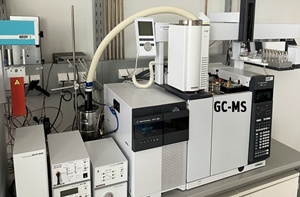
The GC–MS chromatogram and a library-based spectral profile of the ethanolic A. annua extract. Twenty-eight compounds were assigned from the chromatographic data. Molecular formulas, molecular weights, retention times, percentage areas, and similarity indices were reported where available.
RESULTS
Identification of Aeromonas hydrophila
The bacterial isolate recovered from the fish sample was identified phenotypically as A. hydrophila (Table 1). It was a rod-shaped, Gram-negative bacterium and was positive for oxidase, catalase, indole, motility, and TSI reactions, while urease was negative.
GC–MS profile of Artemisia annua extract
GC–MS analysis resulted in 28 library-assigned peaks/compounds (Table 2). The profile included phenolic compounds, hydrocarbons, terpenoid-related compounds, esters, aromatic nitrogen-containing compounds, quinoline derivatives, and siloxane-related compounds. The largest reported peak areas were for 3-dibenzofuranamine (23.9568%), 4-dibenzofuranamine (19.253%), 3,5-heptanedione, 2,2,6,6-tetramethyl- (10.1191%), and the limonene-isomer compound cyclohexane, 1-methylene-4-(1-methylethenyl)- (9.4431%).
Minimum inhibitory and bactericidal concentrations
The extract produced inhibition of A. hydrophila at the highest concentration tested (Table 3). The result showed MIC as 100 mg/mL and indicates that no MBC was recorded because viable bacterial growth remained after subculture from the non-turbid MIC tube.
DISCUSSION
The phenotypic profile of the isolate was consistent with A. hydrophila. The organism was a Gram-negative rod and showed positive oxidase, catalase, indole, motility, and TSI reactions, with a negative urease reaction. The positive oxidase reaction is useful in differentiating Aeromonas from many members of the Enterobacteriaceae, which are generally oxidase-negative. The observed profile agrees with established descriptions of A. hydrophila and supports the identification (Janda and Abbott, 2010; Austin and Austin, 2021). However, because identification in this study was phenotypic, molecular confirmation would strengthen species-level identification in future work.
The GC–MS profile indicated substantial chemical diversity in the ethanolic A. annua extract. Twenty-eight library-assigned compounds were reported, including phenolics, terpenoid-related compounds, hydrocarbons, esters, and nitrogen-containing aromatic compounds. Such chemical diversity is consistent with the general phytochemical complexity reported for Artemisia species, whose biological properties may arise from multiple constituents rather than a single compound (Nigam et al., 2019; Salehi et al., 2020). Among the most abundant library assignment compounds were 3-dibenzofuranamine and 4-dibenzofuranamine, which together accounted for approximately 43.2% of the reported chromatographic area. A limonene-isomer assignment accounted for 9.44% of the reported area. Monoterpenes such as limonene have been associated with antimicrobial activity and can affect bacterial membranes and membrane permeability (Bakkali et al., 2008; Dhifi et al., 2016; Han et al., 2019). The detection of a limonene-related compound therefore provides a plausible chemical basis for part of the inhibitory activity observed in the present study. Squalene was detected at 1.02%. Squalene is a naturally occurring triterpene that has been discussed in relation to antioxidant and membrane-associated biological functions (Popa et al., 2015). Its relatively low abundance in this extract suggests that it is more appropriately considered a possible minor contributor rather than the principal determinant of antibacterial activity. Phenolic compounds were also detected. Phenolics can exert antibacterial effects through several mechanisms, including interactions with microbial membranes, proteins, and enzymes (Cushnie and Lamb, 2011). The presence of phenolic constituents, together with terpenoid-related compounds, supports the possibility that the observed activity arose from combined effects of multiple constituents. The MIC result indicates that the ethanolic extract inhibited visible growth of A. hydrophila at the highest concentration tested, while an MBC was not obtained within the tested range. MIC and MBC represent different endpoints: MIC identifies the lowest concentration preventing visible growth, whereas MBC is based on a defined reduction in viable bacterial cells after subculture (Ishak et al., 2025). The absence of an MBC in the tested range therefore indicates that the extract demonstrated inhibition; therefore, the extract is said to be bacteriostatic rather than bactericidal. The inhibitory rather than bactericidal outcome is biologically plausible for a complex plant extract. Several constituents may exert sublethal pressure on bacterial membranes, metabolic processes, or other cellular targets without achieving complete killing at the tested concentrations. Similar interest in phytochemicals as antibacterial agents against Aeromonas species has been reported, supporting continued investigation of plant-derived products in aquaculture (Kot et al., 2019; Semwal et al., 2023).
From an aquaculture perspective, the findings indicate potential for A. annua as a candidate phytobiotic, but the present data do not justify claiming that the extract can cure established A. hydrophila infections.
CONCLUSION
The study demonstrated that an ethanolic extract of Artemisia annua inhibited Aeromonas hydrophila isolated from Clarias gariepinus under the in vitro conditions investigated. Phenotypic tests supported identification of the isolate as A. hydrophila, while GC–MS profiling revealed a chemically diverse extract containing several compound classes potentially relevant to antimicrobial activity. The reported MIC was 100 mg/mL, whereas no MBC was obtained within the tested range, indicating an inhibitory rather than demonstrably bactericidal effect. The extract therefore represents a promising candidate for further investigation as a plant-derived aquaculture phytobiotic, but additional analytical confirmation, safety studies, dose optimization, and in vivo efficacy trials are required.
REFERENCES
Alara O.R., Abdurahman N.H., Ukaegbu C.I. (2021). Extraction of phenolic compounds: A review. Current Research in Food Science, 4: 200–214.
Austin B., Austin D.A. (2021). Bacterial fish pathogens: Disease in farmed and wild fish (7th ed.). Springer.
Bakkali F., Averbeck S., Averbeck D., Idaomar M. (2008). Biological effects of essential oils: A review. Food and Chemical Toxicology, 46: 446–475.
Balouiri M., Sadiki M., Ibnsouda S.K. (2021). Methods for in vitro evaluating antimicrobial activity. Journal of Pharmaceutical Analysis, 11: 1–9.
Benson H.J. (2021). Microbiological applications: Laboratory manual in general microbiology. McGraw-Hill.
Bhakuni R.S., Jain D.C., Sharma R.P., Kumar S. (2001). Secondary metabolites of Artemisia annua and their biological activity. Current Science, 80: 35–48.
Buller N.B. (2020). Bacteria from fish and aquatic animals: A practical identification manual. CABI.
Cheesbrough M. (2023). District laboratory practice in tropical countries (3rd ed.). Cambridge University Press.
Citarasu T. (2020). Herbal biomedicines: A new opportunity for aquaculture industry. Aquaculture International, 28: 1–15.
Clinical and Laboratory Standards Institute (2023). Performance standards for antimicrobial susceptibility testing. Clinical and Laboratory Standards Institute.
Cushnie T.P.T., Lamb A.J. (2011). Recent advances in understanding the antibacterial properties of flavonoids. International Journal of Antimicrobial Agents, 38: 99–107.
Dhifi W., Bellili S., Jazi S., Bahloul N., Mnif W. (2016). Essential oils’ chemical characterization and investigation of some biological activities: A critical review. Medicines, 3: 25.
Efferth T. (2017). From ancient herb to modern drug: Artemisia annua and artemisinin for cancer therapy. Seminars in Cancer Biology, 46: 65–83.
El-Sayed A.F.M. (2021). Aquaculture and fish farming systems: Growth and challenges. Reviews in Aquaculture, 13: 1–18.
Food and Agriculture Organization of the United Nations (2024). The state of world fisheries and aquaculture 2024.
Han Y., Sun Z., Chen W. (2019). Antimicrobial susceptibility and antibacterial mechanism of limonene against Listeria monocytogenes. Molecules, 25: 33.
Harborne J.B. (2020). Phytochemical methods: A guide to modern techniques of plant analysis. Chapman & Hall.
Hossain M.J. (2020). Antimicrobial resistance in Aeromonas hydrophila isolated from aquatic environments. Journal of Fish Diseases, 43: 1–12.
Ishak A., Mazonakis N., Spernovasilis N., Akinosoglou K., Tsioutis C. (2025). Bactericidal versus bacteriostatic antibacterials: Clinical significance, differences and synergistic potential in clinical practice. Journal of Antimicrobial Chemotherapy, 80: 1–17.
Janda J.M., Abbott S.L. (2010). The genus Aeromonas: Taxonomy, pathogenicity, and infection. Clinical Microbiology Reviews, 23: 35–73.
Juteau F., Masotti V., Bessière J.M., Dherbomez M., Viano J. (2002). Antibacterial and antioxidant activities of Artemisia annua essential oil. Fitoterapia, 73: 532–535.
Kot B., Kwiatek K., Janiuk J., Witeska M., Pękala-Safińska A. (2019). Antibacterial activity of commercial phytochemicals against Aeromonas species isolated from fish. Pathogens, 8: 142.
Miramontes E., Baudrier L., Dumas E., Charpentier S., Haddad M. (2020). Artemisia annua, a traditional plant brought to light. International Journal of Molecular Sciences, 21: 4986.
Mogana R., Adhikari A., Tzar M.N., Ramliza R., Wiart C. (2020). Antibacterial activities of the extracts, fractions and isolated compounds from Canarium patentinervium Miq. against bacterial clinical isolates. BMC Complementary Medicine and Therapies, 20: 55.
Nigam M., Atanassova M., Mishra A.P., Pezzani R., Devkota H. P., Plygun S., Salehi B., Setzer W.N., Sharifi-Rad J. (2019). The genus Artemisia: A review of bioactive essential oils, chemical composition and biological activities. Molecules, 24: 2556.
Popa O., Băbeanu N.E., Popa I., Niţă S., Dinu-Pârvu C.E. (2015). Methods for obtaining and determination of squalene from natural sources. BioMed Research International, 2015: 367202.
Roberts R.J. (2022). Fish pathology (5th ed.). Wiley-Blackwell.
Sakhaie F., Adel M., Safari R. (2025). Chemical composition and antimicrobial activity of Artemisia annua essential oil against fish pathogens. Bulgarian Journal of Veterinary Medicine, 28: 145–153.
Salehi B., Armstrong L., Rescigno A., Yeskaliyeva B., Seitimova G., Beyatli A., Sharmeen J.B., Mahomoodally M.F., Sharifi-Rad J., Martins N. (2020). Plants of the genus Artemisia: From farm to food applications and phytopharmacotherapy. Trends in Food Science & Technology, 100: 216–244.
Semwal A., Kumar A., Kumar N. (2023). A review on pathogenicity of Aeromonas hydrophila and their mitigation through medicinal herbs in aquaculture. Heliyon, 9: e14088.
Soares M.P., Pinheiro V.R., Cardoso I.L. (2020). In vitro antibacterial activity of Artemisia annua extracts against fish pathogens. Aquaculture Research, 52: 1–15.
Sofowora A. (2021). Medicinal plants and traditional medicine in Africa (3rd ed.). Spectrum Books.
Stein S.E. (1999). An integrated method for spectrum extraction and compound identification from gas chromatography/mass spectrometry data. Journal of the American Society for Mass Spectrometry, 10: 770–781.